How to Automate British-Style Hose Clamp Assembly: A Complete Guide
Nov 11, 2026
Introduction
In the world of fluid handling and fastening systems, the British-style worm drive hose clamp remains one of the most widely used components across automotive, plumbing, industrial, and agricultural applications. However, assembling these clamps — especially at scale — has long been a challenge for manufacturers.
Manual assembly is slow, inconsistent, and costly. The question is: how do you automate it without compromising quality or flexibility?
In this post, we walk through the key considerations, the most cost-effective approach, and what you should look for in an automatic assembly solution.
The Challenge: Why British Hose Clamps Are Tricky to Assemble
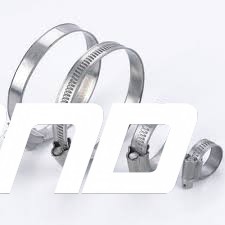
A typical British-style hose clamp consists of several components:
A band (strip) with slots or holes
A housing (often called the "bucket")
A screw (worm drive)
A rivet or spot weld to secure the housing to the band
Each component must be fed, oriented, and assembled with precision. The band is flexible, the screw is tiny, and the housing has tight tolerances. Doing this by hand means:
Low output per worker
High risk of inconsistent quality
Difficulty scaling up production
The Solution: A Modular, Size-Based Approach
After extensive testing and real-world project experience, we found that the most practical and cost-effective approach is not a one-size-fits-all machine, but a modular system that uses the same base platform with interchangeable tooling.
Small Clamps → Small Machine
For smaller hose clamp sizes (e.g., 10×105 and below), a compact assembly machine with lighter tooling is ideal. It runs faster, uses less energy, and is easier to maintain.
Large Clamps → Large Machine
For larger sizes, a heavier-duty machine with stronger clamping and feeding mechanisms ensures consistent quality without deformation.
The Key Insight
Use the same machine platform — just swap the tooling.
This means you only invest in one base machine, and purchase individual tooling sets for each clamp size. This dramatically reduces capital expenditure while maintaining full production flexibility.
Why Feasibility Testing Matters
We believe that price is just a number. What really matters is whether the project can be successfully implemented.
That's why we always ask customers to:
1.Send us the raw materials — bands, housings, screws, and any other components
2.Provide target output — pieces per minute or per shift
3.Share quality requirements — tolerance, surface finish, rejection rate
Only after testing with your actual parts do we finalize the machine design and pricing. This approach eliminates surprises and ensures a smooth commissioning process.
Conclusion: Automate Smart, Not Hard
Automating British-style hose clamp assembly doesn't have to be expensive or complicated. With the right strategy — a modular machine platform + size-specific tooling — you can achieve:
✅ High production efficiency
✅ Consistent quality
✅ Low per-unit cost
✅ Easy size changeover
✅ Fast return on investment
Ready to automate your hose clamp production?
Contact us today to discuss your requirements. Send us your samples, and we'll help you build a solution that works.
📧 Email: sunny@frandchina.com🌐 Website: www.frandchina.com📍 Location: JIAPIN INDUSTRY PARK, JIMEI DISTRICT, XIAEMEN CITY, CHINA